What's the Difference Between a Purchase Order and a Sales Order?
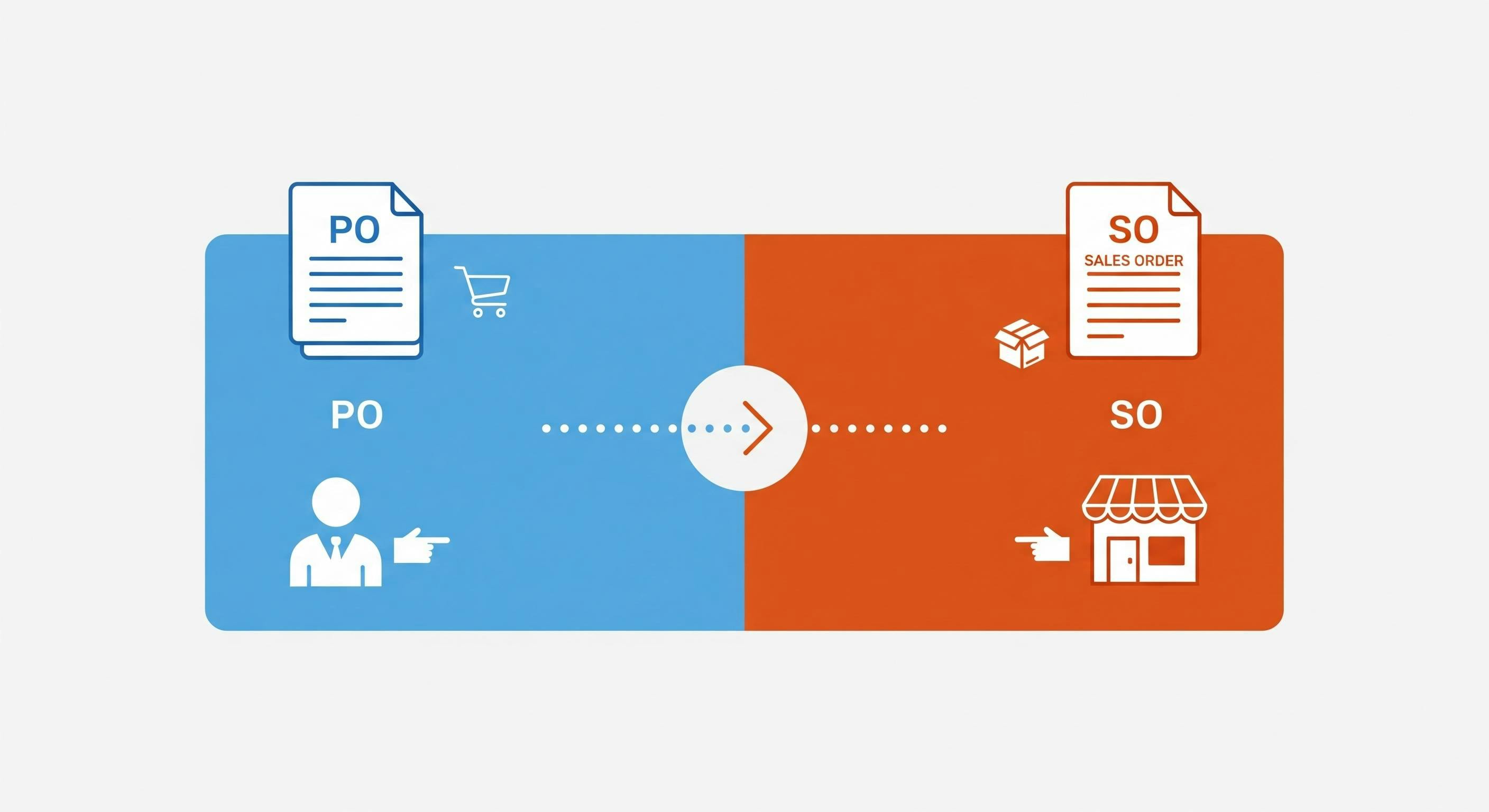
Both Purchase Orders (POs) and Sales Orders (SOs) are crucial commercial documents in the world of business, but they play distinct roles in a transaction.
Think of them as two sides of the same coin: one initiated by the buyer, and the other by the seller. Understanding the difference is key for smooth, transparent business operations. Let's break down these two vital documents.
The core distinction is simple: a Purchase Order (PO) is an official request from a buyer to a seller, while a Sales Order (SO) is a confirmation from a seller back to the buyer. This table makes it easy to see the contrast at a glance:
| Feature | Purchase Order (PO) | Sales Order (SO) |
|---|---|---|
| Issued By | The Buyer 🙋♂️ | The Seller (Supplier) 🏪 |
| Issued To | The Seller (Supplier) 🏪 | The Buyer (Customer) 🙋♂️ |
| Purpose | To request goods or services, formalizing the buyer's intent to purchase. | To confirm the sale, acknowledging the buyer's order and outlining what will be provided. |
| Timing | Initiates the purchasing process. It's sent before the transaction is confirmed. | Confirms the transaction. It's sent after the seller receives and accepts the PO. |
| Perspective | The buyer's perspective: "What I want to buy." | The seller's perspective: "What I will provide." |
| Legal Status | Becomes legally binding only when it's accepted by the seller. | Acts as a confirmation and forms part of the legally binding agreement. |
| Document Number | A unique PO number assigned by the buyer. | A unique SO number assigned by the seller. This often references the buyer's PO number. |
| Business Focus | Cost management for the buyer. | Revenue management and inventory tracking for the seller. |
The interaction between a PO and an SO follows a logical, sequential flow:
While they contain similar information, both documents are vital for a clear and transparent transaction.
In essence, the Purchase Order starts the conversation, and the Sales Order confirms the agreement, creating a clear and legally sound paper trail for both parties.
Think of it like this:
Both documents are essential for ensuring everyone is on the same page, from the moment a request is made until the goods are delivered and the payment is settled.