Frappe Framework Hosting: Cloud VPS vs Managed Hosting vs Frappe Cloud (Cost Comparison)
It's midnight, you just finished the first working build of your Frappe app 🎉, and a new question is keeping you awake: where does this actually live tomorrow. You type "how much does it cost to host Frappe" into Google, hoping for a straight answer — and instead find a maze of forum threads, pricing pages, and contradictory opinions.
This post is that straight answer — a real cost and trade-off comparison between running your own Cloud VPS, paying a managed hosting provider, or using Frappe Cloud, the official platform from Frappe Technologies.
Reading time: about 10 minutes.
Founders evaluating their first production deployment, solo developers shipping a client's Frappe app 🧑💻, and small teams trying to decide whether DevOps should be a hire, a subscription, or a non-issue.
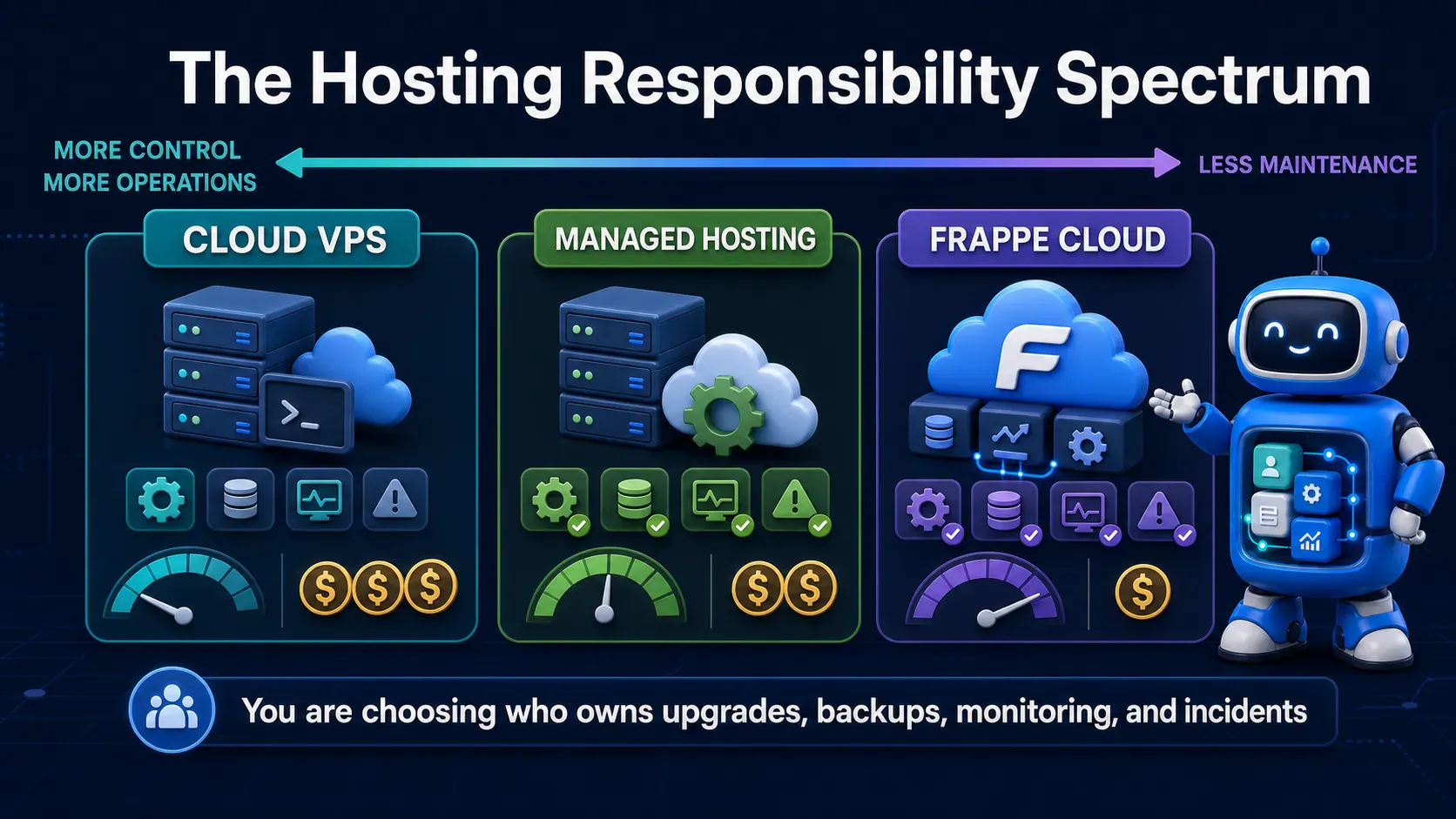
Every Frappe hosting decision comes down to three dials: cost, control, and convenience ⚖️ — and you can only max out two at a time.
Push cost down and you'll pay in your own time and stress. Push convenience up and you'll pay in dollars or in flexibility. There is no option that gives you all three simultaneously, and anyone selling you that story is skipping the fine print. 🚩
The goal of this post isn't to tell you which option is "best." It's to help you see clearly which two dials matter most to you right now, at your current stage, with your current team.
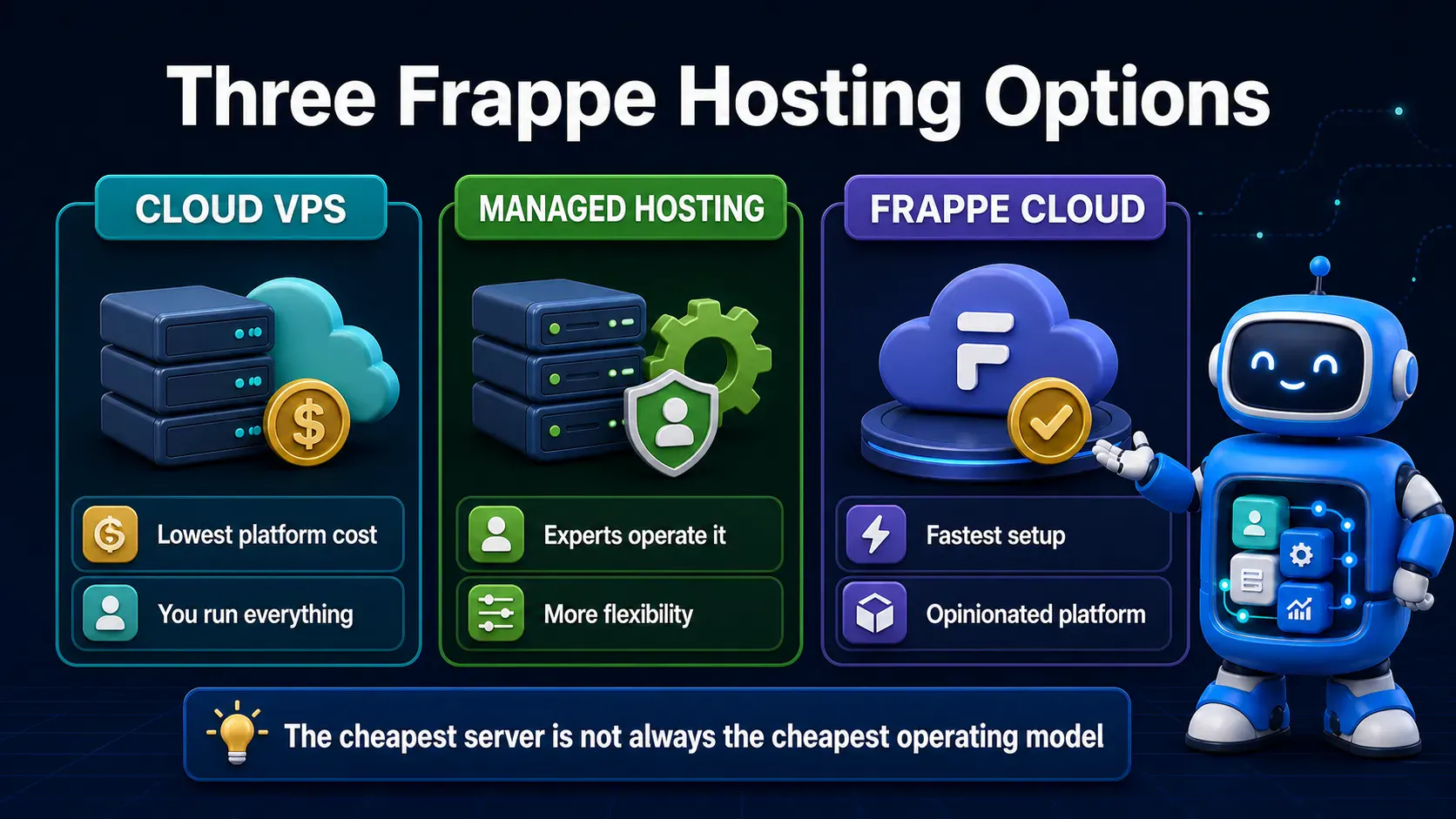
This is renting a raw virtual machine from a provider like DigitalOcean, Linode, Hetzner, or AWS EC2, then installing and running Frappe/ERPNext yourself using tools like bench and Docker.
You get full root access to a Linux box. Everything from there — OS updates, the database, backups, SSL certificates, firewall rules, and every 3am outage — is on you.
| App Size | VPS Spec | Est. Monthly Cost |
|---|---|---|
| Small (<10 users) | 2 vCPU / 4GB RAM | $20 – $40 |
| Mid-size (50–200 users) | 4 vCPU / 8–16GB RAM | $60 – $120 |
| Scaling SaaS | Multiple nodes + load balancer + managed DB | $200 – $600+ |
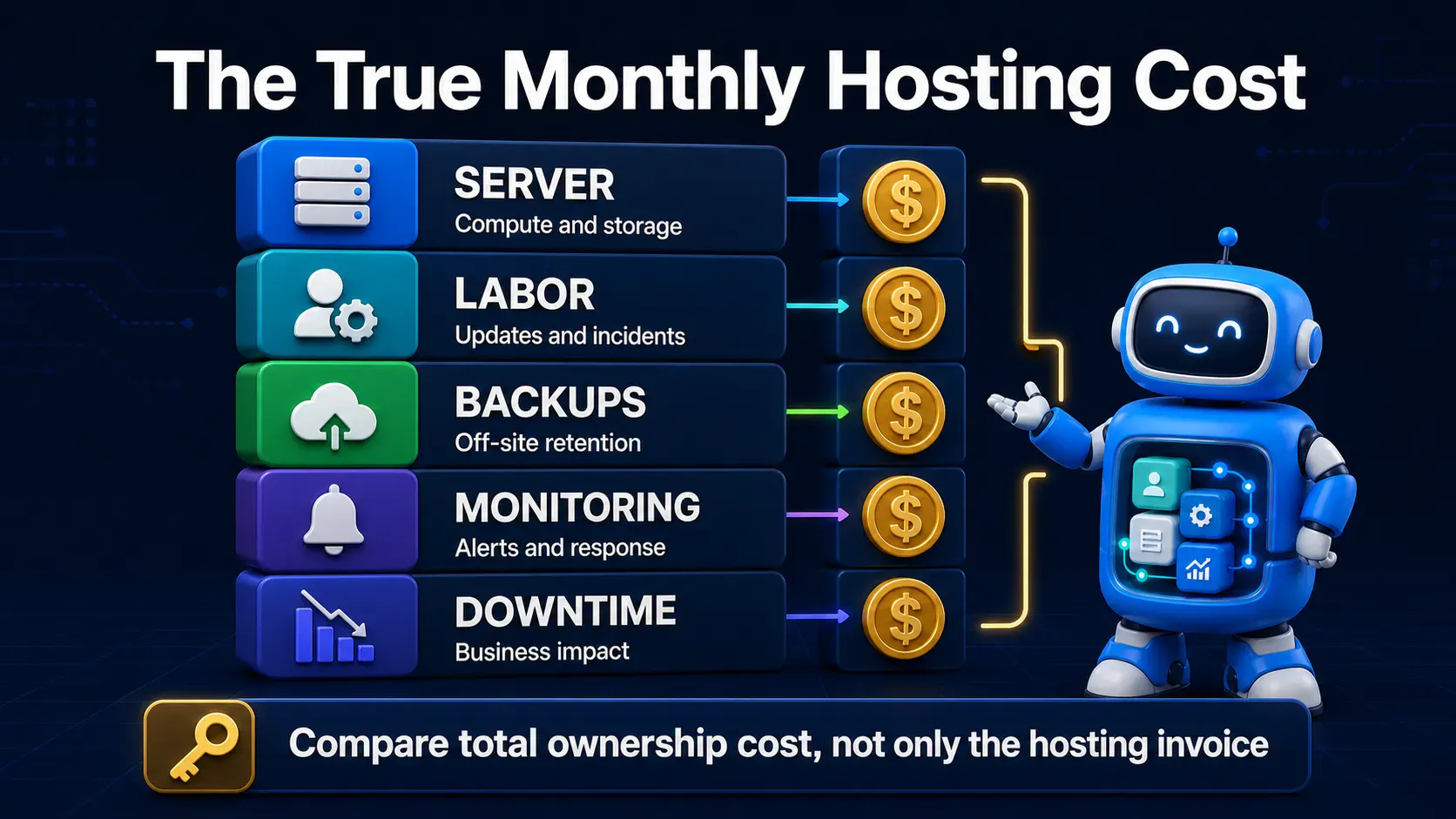
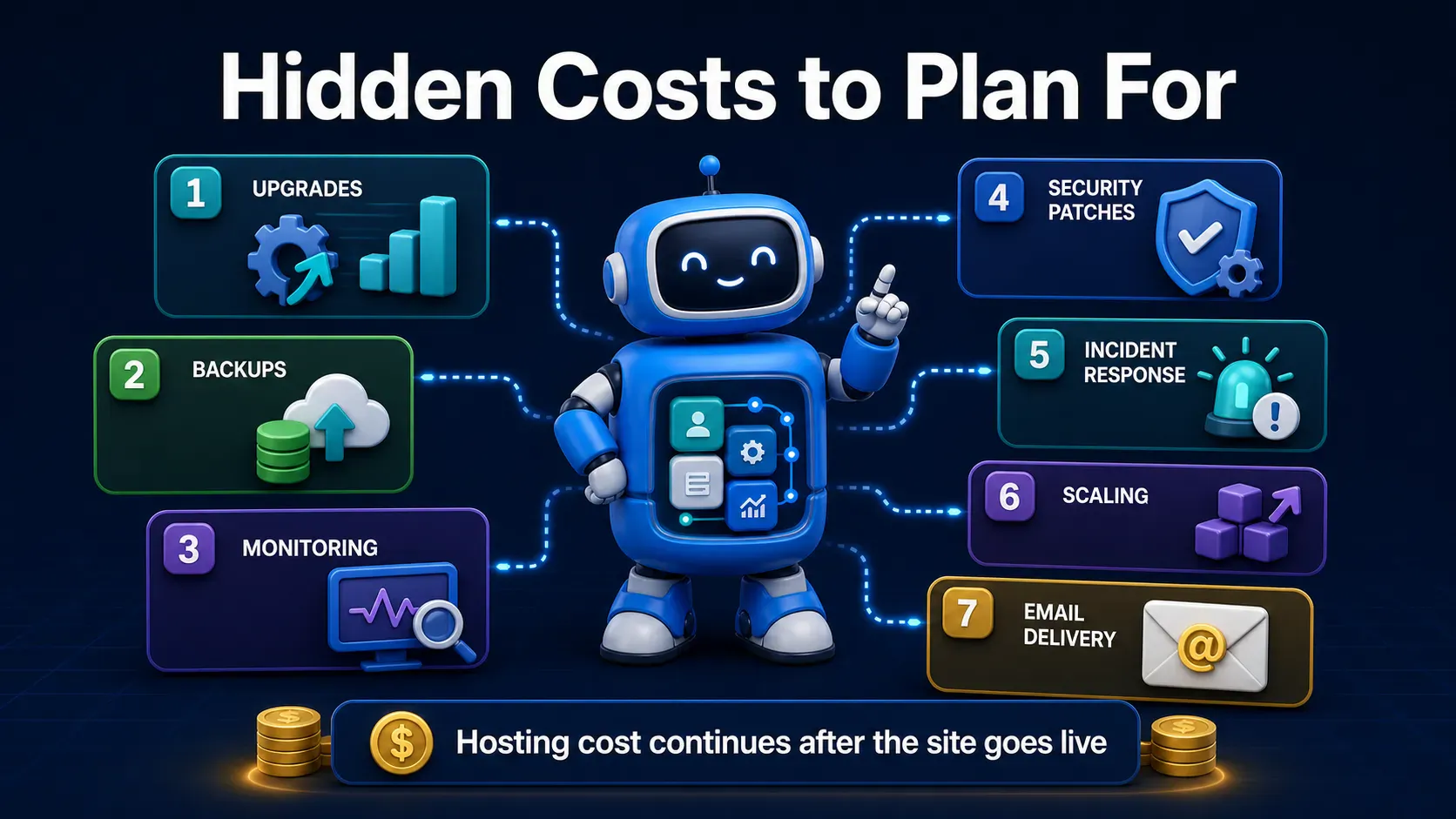
📌 These numbers cover compute only — not your time, not backup storage, not a domain, not monitoring tools.
Here a third-party provider or freelance DevOps consultant manages the underlying VPS for you — patching, backups, SSL, uptime monitoring — while you keep some or full access to the server.
This sits between raw VPS and a full PaaS: you're not doing the 2am pager duty yourself, but you're also not getting Frappe-specific tooling built in.
| App Size | What's Typically Included | Est. Monthly Cost |
|---|---|---|
| Small (<10 users) | 1 server, basic monitoring, backups | $80 – $200 |
| Mid-size (50–200 users) | Dedicated resources, faster support | $250 – $600 |
| Scaling SaaS | Multi-server setup, on-call SLA | $700 – $2,000+ |
⚠️ This is the widest cost range of the three options because "managed hosting" is not a standardized product — always ask exactly what's covered before signing.
Frappe Cloud is the managed platform built by Frappe Technologies themselves, purpose-built for hosting Frappe and ERPNext apps with one-click deploys, automated backups, and built-in scaling.
This is the closest thing to "it just works" for Frappe specifically — because the people who built the framework also built the hosting platform.
| App Size | Plan Type | Est. Monthly Cost |
|---|---|---|
| Small (<10 users) | Starter/shared plan | $10 – $50 |
| Mid-size (50–200 users) | Standard dedicated plan | $100 – $300 |
| Scaling SaaS | Premium/dedicated cluster plans | $400 – $1,500+ |
✨ Frappe Cloud's pricing is the most transparent of the three since it's published — but always verify current tiers before budgeting, as PaaS pricing structures change more often than raw VPS pricing.
| Factor | Self-Managed VPS | Managed Hosting | Frappe Cloud |
|---|---|---|---|
| Raw cost | Lowest | Highest variance | Low–mid |
| Setup effort | High (you build it) | Low–medium | Very low |
| Maintenance burden | 100% on you | Shared with provider | Mostly handled for you |
| Scaling | Manual, vertical | Depends on provider | Built-in plans |
| Support | Community forums only | Human SLA (varies) | Frappe team support |
| Control | Full root access | High, provider-dependent | Platform-constrained |
| Vendor lock-in | None | Low–medium | Medium |
| Best for 2am outages | You wake up | Provider wakes up (maybe) | Platform auto-recovers/alerts |
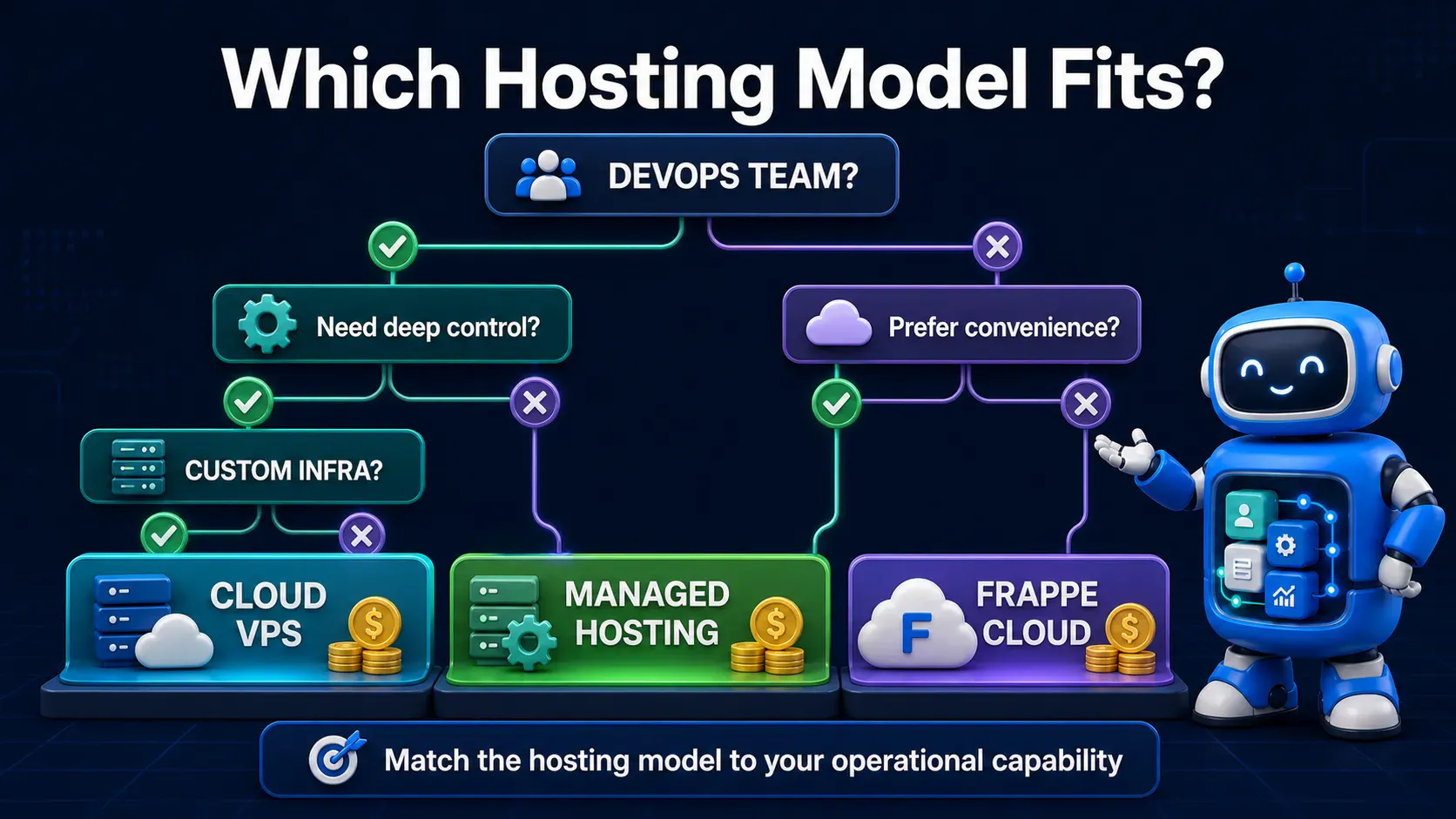
There is no universally "best" option here — only the option that matches your team's current DevOps capacity and risk tolerance. 🎯
If you're a solo founder without ops experience, the peace of mind from Frappe Cloud is usually worth the premium over a raw VPS. If you already have the skills or the headcount, self-managing can meaningfully cut costs at scale.
Whatever you pick, budget for the hidden costs above — the sticker price is never the real price. 💸
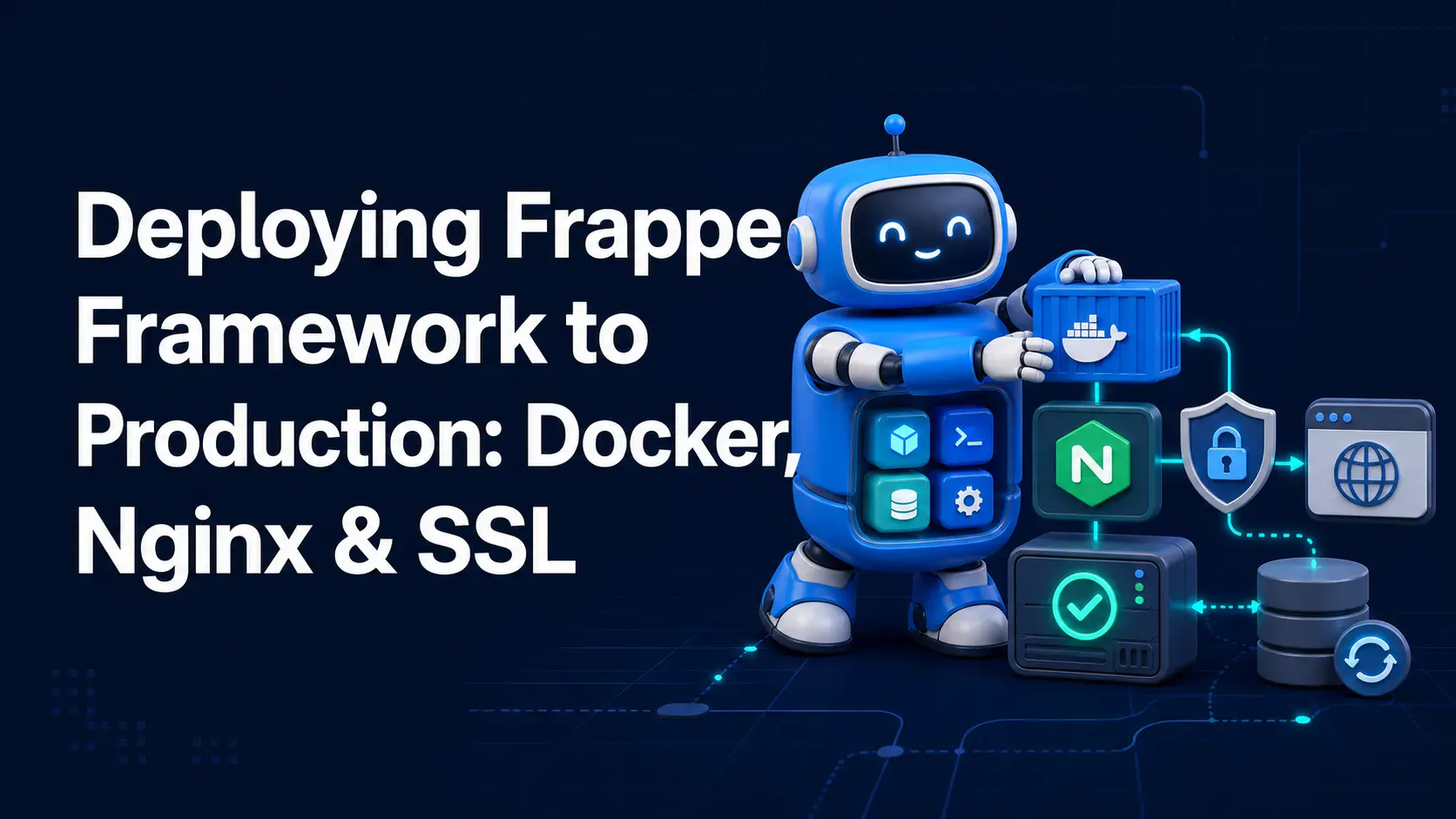
A complete, practical guide to deploying Frappe Framework in production using frappe_docker, Nginx as a reverse proxy, and Let's Encrypt SSL — no bench start required.

Learn how to add Stripe and Razorpay subscription billing to a custom Frappe app — whitelisted APIs, webhook signature verification, and scheduler-based renewals.

Stop fighting the built-in resource API for complex business logic. Here's how to expose your own Python functions as clean, secure REST endpoints in Frappe